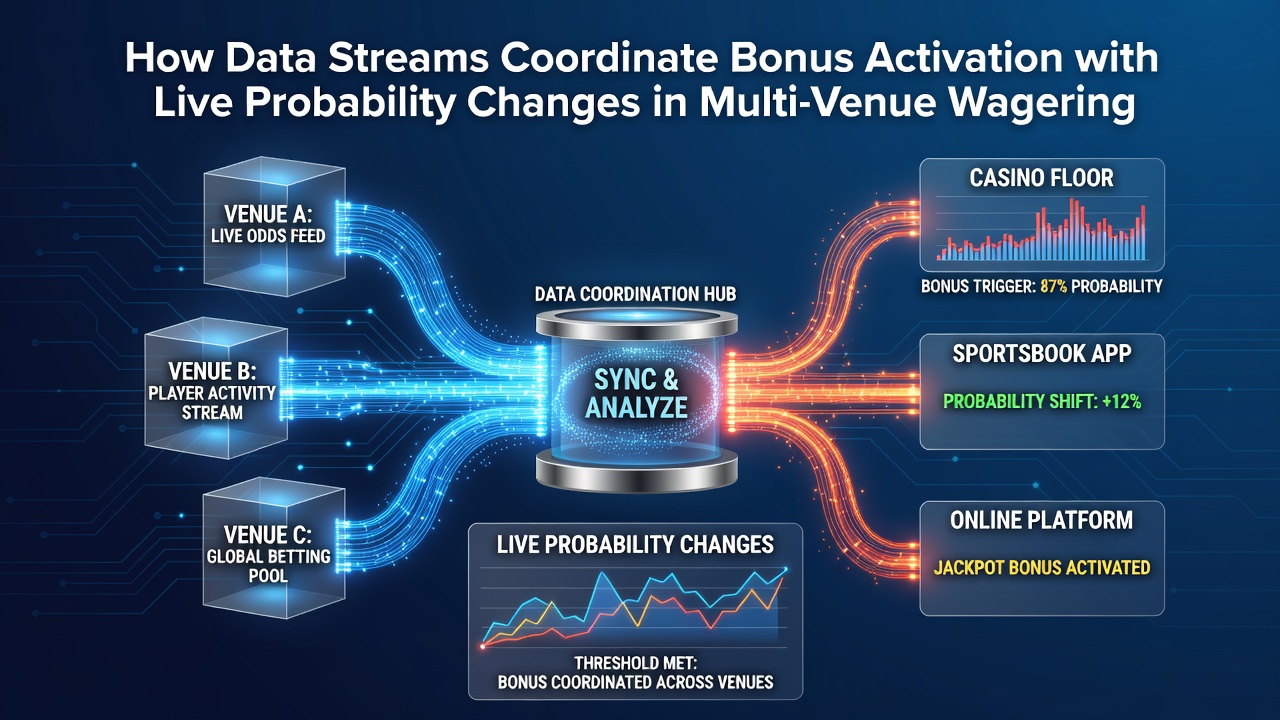
Data Integration Mechanisms Linking Promotional Triggers to Dynamic Odds in Cross-Platform Betting Environments
Modern wagering platforms rely on interconnected data pipelines that process live probability updates and promotional triggers simultaneously across multiple venues including sportsbooks, horse racing circuits, and casino tables. These systems handle continuous feeds from event tracking sensors, market pricing engines, and user account ledgers so that bonus activations occur precisely when probability thresholds shift in real time. According to reports from the Australian Communications and Media Authority, operators in regulated markets must maintain audit trails that document every synchronization event between funding instruments and odds movements.
Engineers design these pipelines around event-driven architectures where microservices listen for changes in underlying probability models. When a live basketball game enters the fourth quarter or a horse race reaches the final furlong, probability recalculations propagate through message queues to both odds displays and bonus eligibility modules. The same data packet that updates a point-spread line also checks whether a user has met rollover conditions tied to that specific market.
Core Components of Real-Time Synchronization
Three primary layers support coordination between bonus logic and live odds. The ingestion layer collects raw data from venue APIs and third-party feeds. The processing layer applies business rules that determine bonus eligibility based on current probabilities. The distribution layer pushes synchronized updates to mobile clients and web interfaces within milliseconds. Observers note that latency below 200 milliseconds remains standard for platforms operating across North American and European jurisdictions during peak hours in July 2026.
Message brokers such as Apache Kafka or cloud-native equivalents route events between these layers. Each bonus rule exists as a stateless function that evaluates incoming probability deltas against stored user criteria. When conditions align, the system issues a credit token that appears alongside the updated odds without requiring additional user input.
Multi-Venue Data Flow Patterns
Platforms serving simultaneous horse racing, basketball, and table game markets maintain separate probability engines yet share a common bonus orchestration service. A wager placed on an equine event can trigger a casino bonus if the user's overall session meets predefined activity metrics. Data streams carry venue identifiers and timestamp markers so the orchestration service can correlate events across unrelated competitions. Research from the Canadian Centre for Gaming Research indicates that operators using unified bonus services report higher session continuity when users switch between racing forms and live sports props.
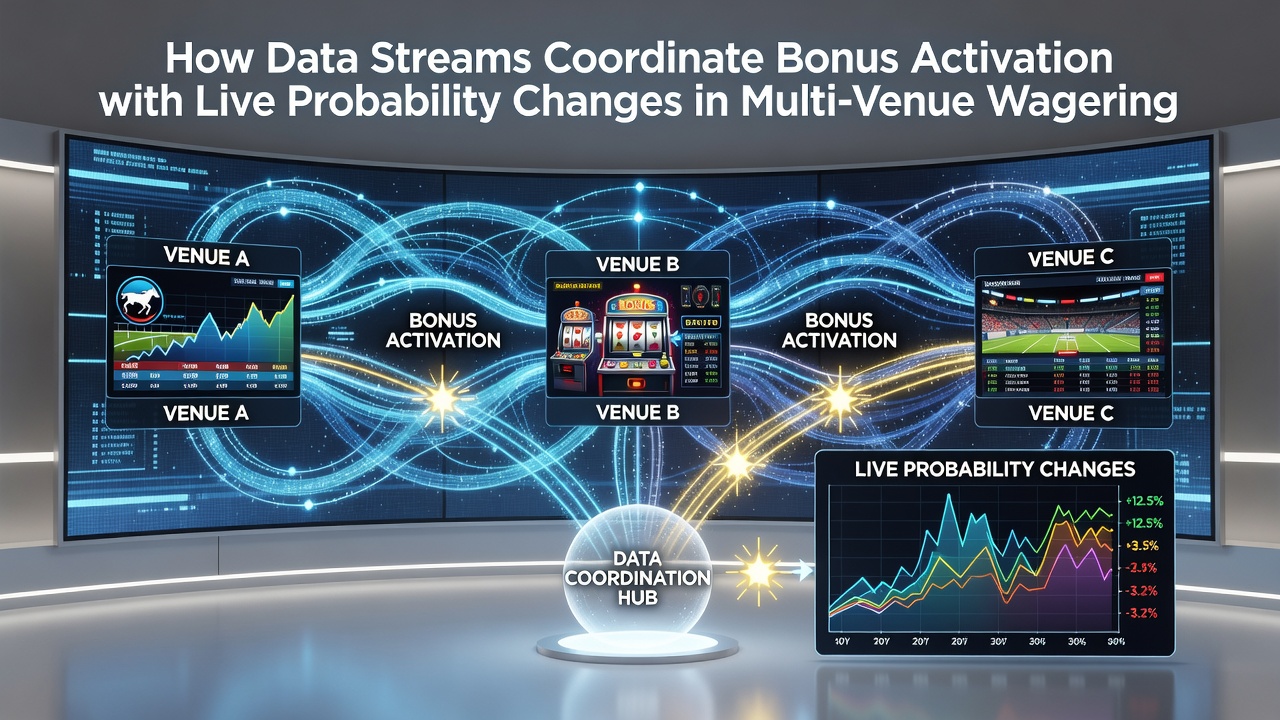
Geographic distribution adds another dimension. European operators often route traffic through data centers in Frankfurt and Dublin while North American platforms favor Chicago and Toronto nodes. Cross-region replication ensures that a probability shift detected at one venue instantly updates bonus availability for users accessing the platform from any location. Failover mechanisms reroute streams if a regional node experiences delays, preserving the timing between odds movement and promotional credit release.
Regulatory and Technical Compliance Requirements
Regulators in multiple jurisdictions require operators to demonstrate that bonus activations do not precede corresponding probability changes. Audit logs must record the exact sequence of data packets that led to each credit. In practice, this means every bonus token carries a cryptographic reference to the probability event that authorized it. Technical teams implement hash-chained ledgers so that post-event reviews can reconstruct the precise order of operations without ambiguity.
July 2026 schedules show overlapping major events across leagues and racing calendars, increasing the volume of simultaneous probability updates. Systems must scale horizontally during these periods while maintaining deterministic behavior for bonus rules. Load testing conducted by independent laboratories confirms that properly architected pipelines sustain throughput exceeding 50,000 events per second without introducing ordering errors between odds and promotions.
Conclusion
Data streams that coordinate bonus activation with live probability changes form the operational backbone of multi-venue wagering platforms. These systems combine event-driven processing, distributed messaging, and strict audit requirements to deliver synchronized experiences across sports, racing, and casino environments. Continued refinement of these pipelines supports regulatory compliance and operational reliability as event calendars grow denser.