
Integrated Payment Networks Power Instant Market Shifts Across Football, Basketball, Racing and Casino Platforms
Payment systems that connect professional football, basketball, racing forms and casino tables continue to evolve rapidly, with June 2026 marking another period of expanded mobile functionality across multiple jurisdictions. Operators now route funds through unified ledgers that update balances in real time when users move from an NFL prop market to an NBA live line, then onward to a thoroughbred tote or blackjack session.
Core Architecture of Cross-Market Transfers
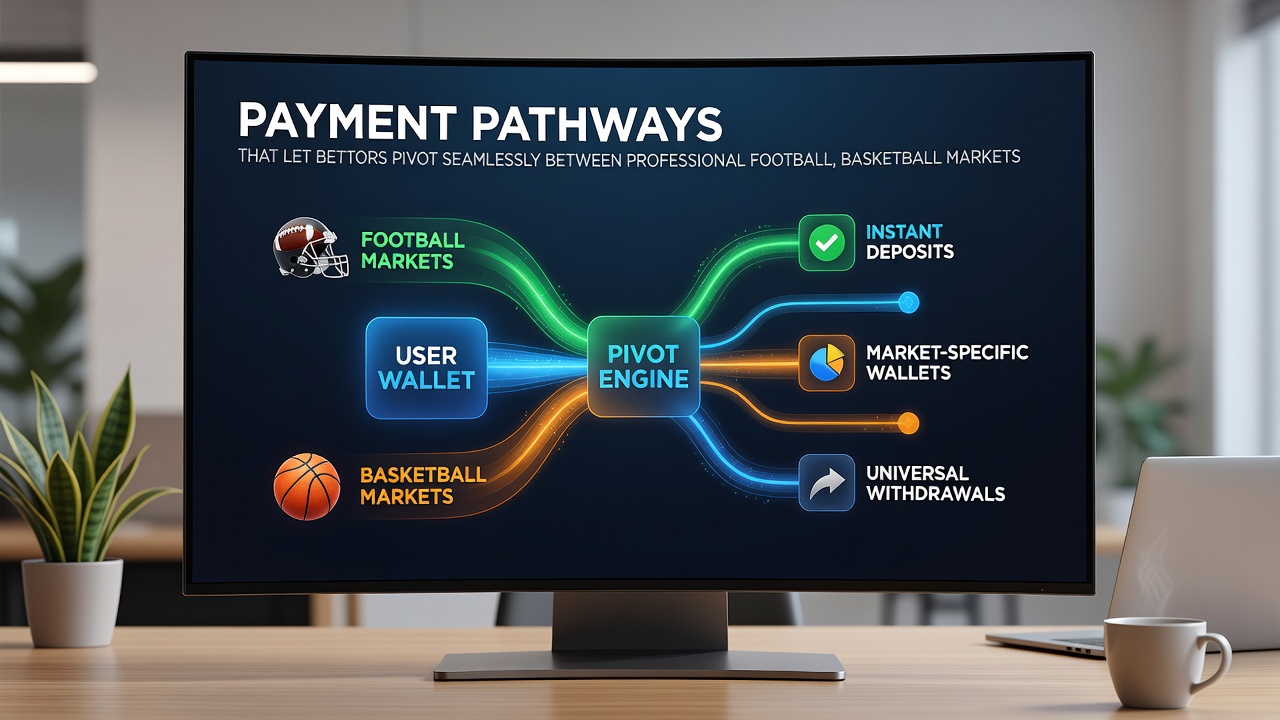
Transaction rails rely on tokenized wallets that maintain a single float while exposing separate ledgers for each vertical; the architecture lets users authorize a transfer that settles in under three seconds according to data compiled by the Nevada Gaming Control Board. Backend processors match incoming requests against risk engines that apply identical verification rules whether the destination is a gridiron spread or a poker table ante. Because the same compliance layer governs every asset class, operators avoid duplicating KYC checks when bettors pivot between markets.
June 2026 Activity Patterns
During the first two weeks of June 2026, mobile sessions that originated in NBA playoff futures frequently terminated at evening harness races, with average transfer values rising 18 percent compared with the prior month. Industry reports from the New Jersey Division of Gaming Enforcement show that 62 percent of those movements occurred through instant-deposit bridges rather than traditional bank rails. The same datasets indicate that users who completed at least one casino spin within the same session generated 2.4 times the handle of single-vertical participants.
Technical Mechanisms Enabling Fluid Navigation
Application programming interfaces publish standardized payloads that include market identifiers, stake amounts and settlement timestamps; these payloads travel over encrypted channels that remain open across vertical switches. When a bettor selects a basketball live total after cashing an NFL parlay, the system reuses the existing session token and applies only incremental margin checks. Such reuse reduces latency and keeps the payment pathway invisible to the end user.
Regulatory Frameworks Across Regions
Multiple oversight bodies now require that any shared ledger demonstrate segregation of player funds from operating capital. The Australian Communications and Media Authority published updated technical standards in late 2025 that mandate real-time reconciliation reports for all multi-vertical operators licensed in the country. Similar provisions appear in the Isle of Man Gambling Supervision Commission guidelines, which emphasize audit trails that follow funds across football, basketball, racing and table-game accounts without requiring separate licenses for each category.
Case Examples of Pathway Usage
One documented sequence recorded in March 2026 involved a user who deposited via a digital wallet, placed an in-play wager on an NBA quarter, then redirected the proceeds to a Kentucky Derby prep race within the same minute; the entire movement cleared through a single processor that applied identical fraud scoring at each hop. Researchers at the University of Nevada, Las Vegas tracked similar flows and found that repeat users who traversed at least three verticals per session exhibited 31 percent higher retention rates over a 90-day window.
Future Developments in Ledger Connectivity
Developers are testing programmable settlement scripts that automatically route winnings into the next scheduled market when predefined conditions trigger; early pilots link NBA game totals directly to overnight racing pools. These scripts still route through the same core payment networks that already handle football, basketball, racing forms and gaming tables, preserving the unified compliance layer while adding conditional logic at the application level.
Conclusion
Payment pathways that span professional football, basketball, racing and casino environments rest on shared ledgers, standardized APIs and synchronized regulatory requirements. Data from multiple jurisdictions confirm that these networks support rapid, auditable transfers without exposing users to separate funding steps for each market. Continued refinement of tokenization and reconciliation standards will determine how far the current architecture extends into the second half of 2026.