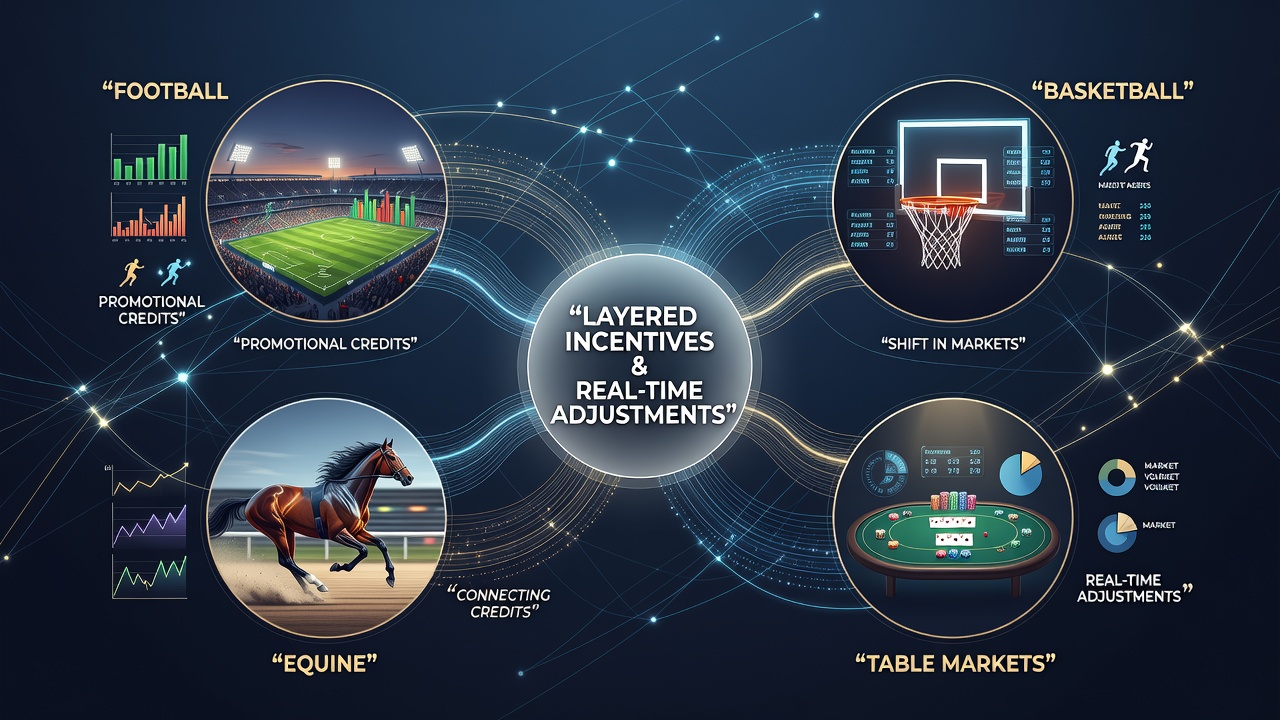
Layered Incentives and Real-Time Adjustments: Connecting Promotional Credits to Shifts in Football, Basketball, Equine, and Table Markets
Layered incentives operate through structured promotional credits that platforms distribute across multiple betting categories, and these credits connect directly to live line movements in football, basketball, equine racing, and table games. Systems track user activity in real time so that bonus amounts adjust automatically when odds shift due to new information or volume changes. Data from industry reports shows that such integration appears most frequently in mobile applications where users move between markets without separate funding steps.
How Layered Credits Function in Football Markets
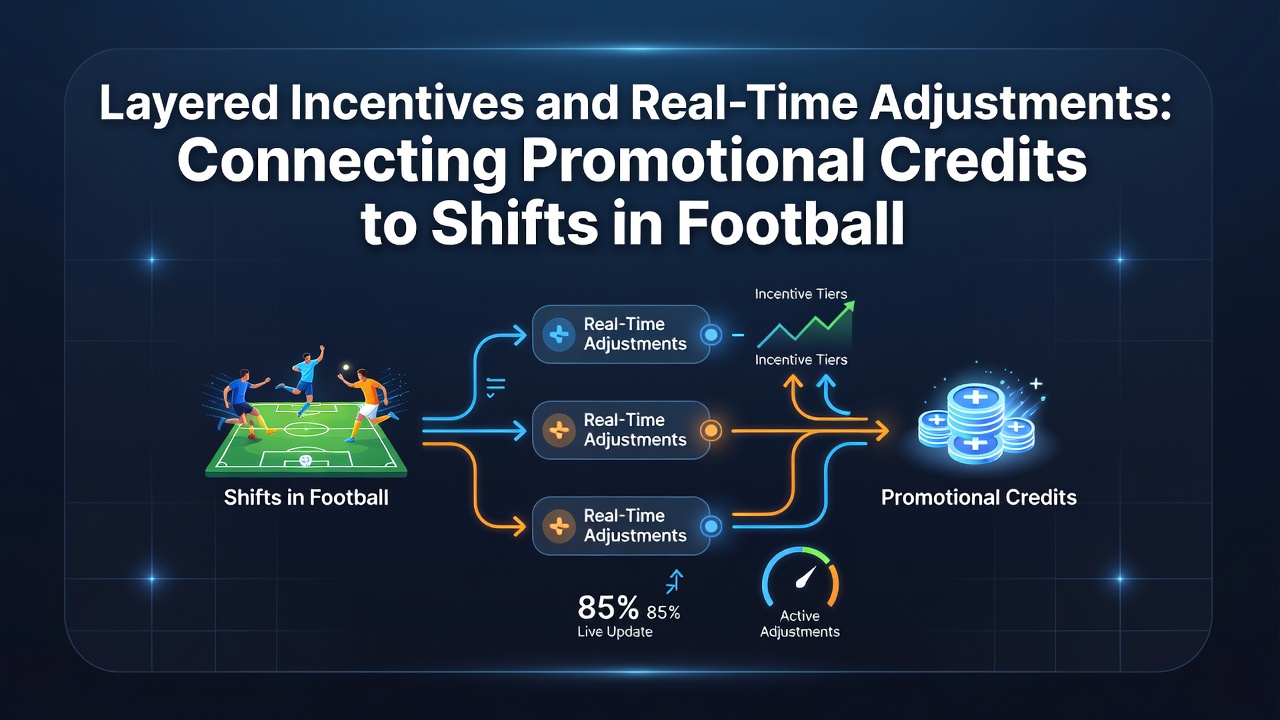
Football betting platforms apply initial deposit matches or free bet credits that then scale according to live adjustments in point spreads and totals. When game-time information such as injury reports or weather updates alters the line, the remaining credit balance recalibrates within the same session. Observers note that this process reduces the number of manual transfers users must complete, since the system reallocates unused portions of a credit toward newly available football props. Figures released by the American Gaming Association indicate that football markets accounted for a significant share of real-time credit redemptions during the 2025 season, with similar patterns continuing into summer training camp periods in July 2026.
Basketball Adjustments and Credit Layering
Basketball lines move quickly during live quarters, and layered credits respond by updating eligible bet types without requiring users to claim new bonuses. A credit earned from an earlier deposit can convert into a boosted stake on a second-half total once the halftime line adjusts. Research from university studies on digital wagering platforms demonstrates that these automatic conversions occur most often when volume spikes in popular player prop markets. The mechanism relies on application programming interfaces that pull both credit ledgers and odds feeds into a single calculation engine, allowing seamless transitions between basketball games and other active events.
Equine Racing and Continuous Credit Updates
Equine markets present unique timing challenges because races occur at fixed intervals throughout the day. Promotional credits issued for early card selections carry forward and recalibrate when odds on later races change due to track conditions or scratch reports. Those who have examined equine betting data find that platforms often apply tiered multipliers to remaining credits once a user places a successful bet on an earlier race. In July 2026, major tracks maintain year-round schedules that overlap with off-season sports, so the same credit pool serves both equine and team-sport wagers without additional deposits.
Table Markets and Integrated Credit Mechanics
Table games such as blackjack and roulette incorporate promotional credits that adjust according to real-time probability shifts displayed on digital interfaces. When a table's payout structure changes because of rule variations or player volume, the system reallocates unused credits toward newly favorable bets. Industry reports compiled by the European Gaming and Betting Association highlight that table market operators increasingly rely on the same backend infrastructure used for sports and racing, which enables cross-market credit movement in a single wallet. This shared infrastructure supports rapid switches between table sessions and live sports events without interrupting the credit lifecycle.
Cross-Market Synchronization Patterns
Platforms that serve all four categories maintain unified ledgers so that a credit originating in one market remains available when the user shifts focus. Real-time adjustment engines monitor both credit balances and market volatility, triggering reallocations when thresholds are met. Studies of multi-category betting applications reveal that synchronization reduces session interruptions and supports longer engagement periods across football drives, basketball runs, equine races, and table streaks. The same engines also record regulatory compliance data, ensuring that credit modifications stay within jurisdictional limits set by different oversight bodies.
Technology Driving the Connections
Application programming interfaces pull live odds from multiple feeds while simultaneously updating credit ledgers stored in centralized databases. When a football line moves, the system checks active credits tagged for football and recalculates their usable value against the new odds before presenting updated options. Similar checks run for basketball quarters, equine post times, and table game rounds. Observers note that this continuous loop depends on low-latency connections between sportsbook, racebook, and casino modules within the same platform architecture.
July 2026 Market Context
During July 2026, equine calendars remain active while football training camps and basketball off-season events generate early prop markets. Table games operate without seasonal interruption. Layered credit systems therefore manage overlapping activity spikes, reallocating promotional balances toward whichever market shows the strongest line movement at any given moment. Data collected across these periods shows that users frequently transition between categories within single sessions, and the layered incentive structure accommodates those transitions without requiring repeated verification steps.
Conclusion
Layered incentives tied to real-time adjustments create a unified framework that links promotional credits across football, basketball, equine, and table markets. The technical connections rely on shared data pipelines that update both odds and credit values simultaneously, supporting continuous participation as market conditions evolve. Regulatory records and industry analyses confirm that these systems operate within established compliance parameters while enabling the documented patterns of cross-category movement observed in 2026.