Payment Processing Timelines Shape Promotional Credit Allocation in Basketball Markets, Football Props, Equine Events, and Gaming Tables
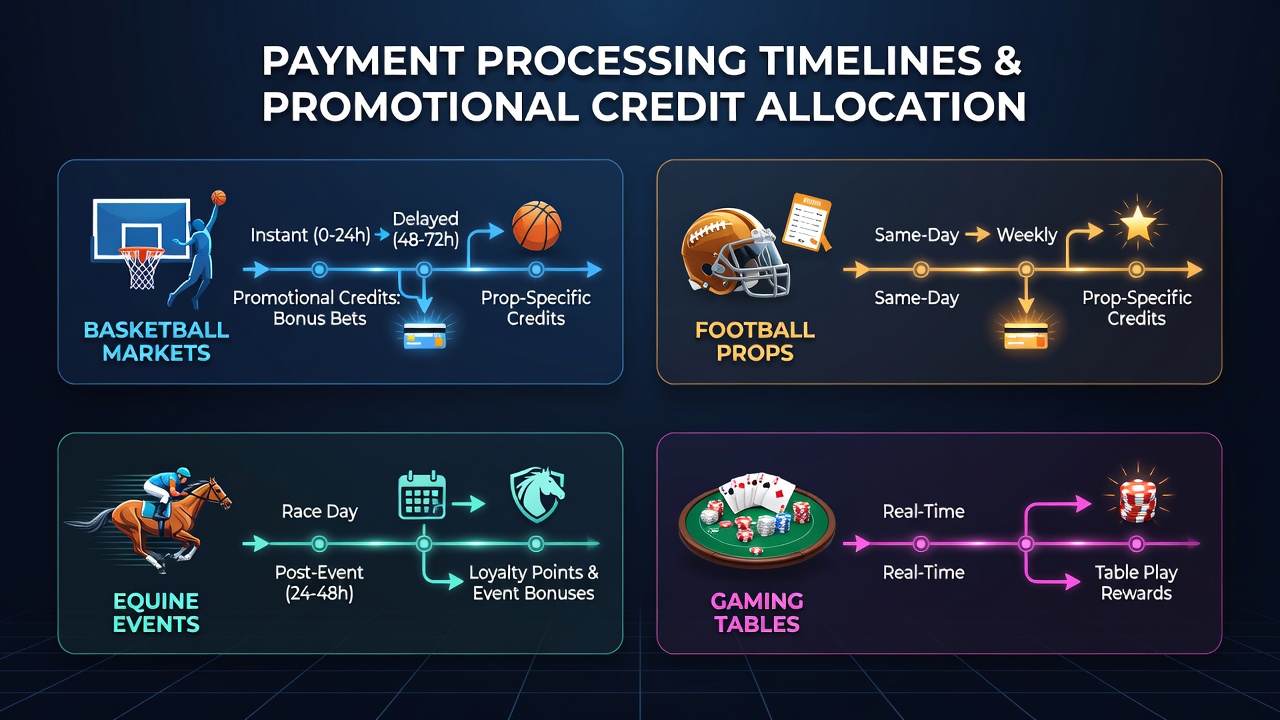
Payment systems in betting environments operate through defined timelines that determine when funds clear and when promotional credits become available for use. In July 2026 observers noted continued reliance on these timelines across platforms that handle basketball markets, football props, equine events, and gaming tables because the speed of processing directly affects credit release schedules. Data from industry reports show that deposits processed within seconds allow operators to allocate bonus funds almost immediately, whereas delays of several hours or more push credit activation into later windows that may miss peak betting periods. Basketball markets often feature rapid line movements during live games, and platforms tie promotional credits to deposit confirmation times to encourage participation in those windows. When a user completes a deposit that clears in under 30 seconds, the system can release matching credits within the same minute according to automated rules set by operators. Slower bank transfers that take 24 to 48 hours create gaps where credits remain unavailable until the next day, reducing their utility for time-sensitive basketball props that expire quickly. Football props present another layer because they frequently involve multiple game segments and player-specific outcomes that update throughout the week. Processing timelines influence credit allocation here as well because many platforms apply bonus funds only after the initial deposit settles through the chosen method. Electronic wallets that confirm transactions in real time enable immediate credit drops, while credit card authorizations that require batch processing can postpone allocation until the following business cycle. Regulatory filings from the Nevada Gaming Control Board indicate that these timing differences affect how often users engage with props tied to specific quarters or halves. Equine events add distinct requirements because race schedules run on fixed calendars with limited windows for each meet. Promotional credits linked to deposits must activate before post times if they are to apply to morning lines or live odds. Platforms that integrate instant payment rails report higher rates of credit usage in the hours leading up to major races, whereas methods with longer settlement periods push users toward later events or force them to forgo the promotion entirely. Research from the University of Nevada, Las Vegas gaming studies shows measurable differences in participation rates when credit release aligns with race day rather than the following morning. Gaming tables operate under continuous play cycles where table minimums and promotional match offers change throughout each shift. Payment processing speed determines whether a deposited amount triggers an instant credit boost that can be applied at the table or whether the user must wait through a verification step. Systems using blockchain-based transfers or instant bank feeds complete the loop faster, allowing credits to appear before the next hand or spin. Slower options create pauses that interrupt session flow and reduce the effective window for the allocated bonus.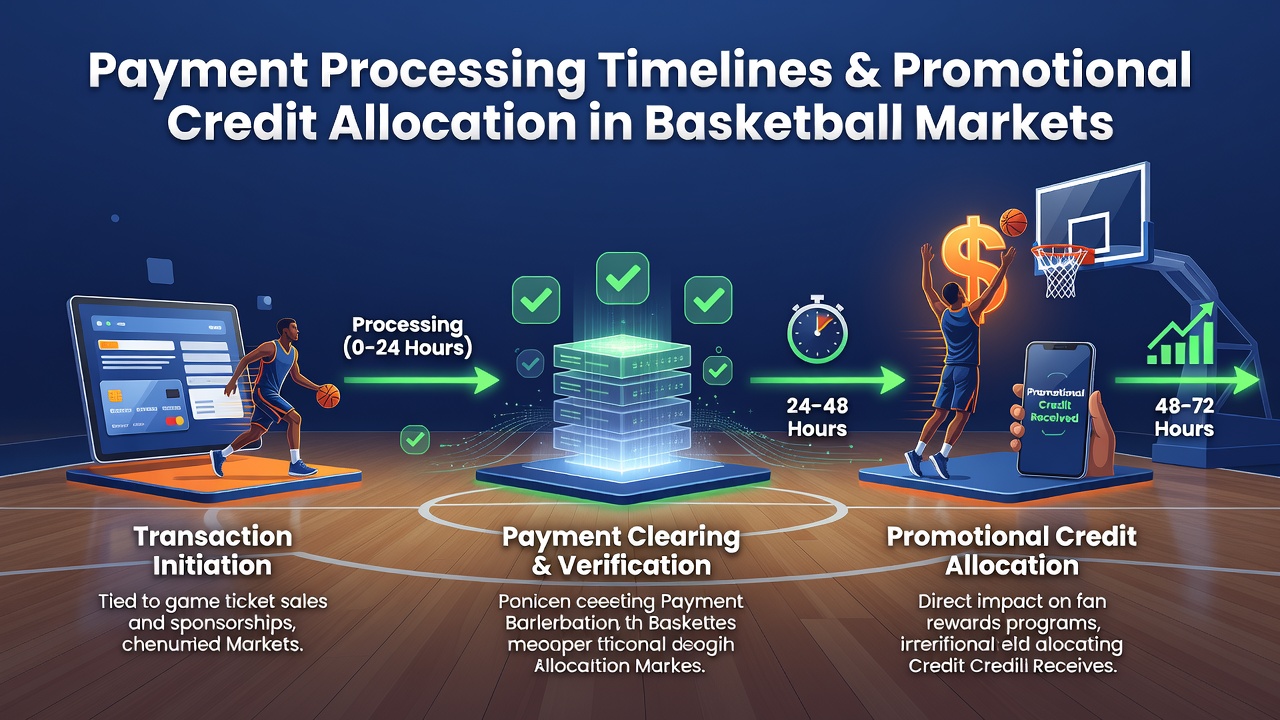 Engagement data reveal that users who select faster processing options tend to deploy promotional credits across multiple market types within the same session. A single deposit can fund basketball live bets, football player props, equine wagers, and table play when credits activate immediately. Delays fragment this activity, pushing users to concentrate credits in one category while missing opportunities in others. Figures from the American Gaming Association annual reports highlight that integrated payment and credit systems correlate with broader market participation. Platforms that synchronize processing timelines with promotional engines maintain separate queues for each market segment. Basketball and football props receive priority during evening hours in North American time zones, while equine events receive attention during morning and afternoon race cards. Gaming tables maintain round-the-clock allocation because table action never pauses. This segmentation ensures credits land in the intended market without manual intervention.
Payment systems in betting environments operate through defined timelines that determine when funds clear and when promotional credits become available for use. In July 2026 observers noted continued reliance on these timelines across platforms that handle basketball markets, football props, equine events, and gaming tables because the speed of processing directly affects credit release schedules. Data from industry reports show that deposits processed within seconds allow operators to allocate bonus funds almost immediately, whereas delays of several hours or more push credit activation into later windows that may miss peak betting periods. Basketball markets often feature rapid line movements during live games, and platforms tie promotional credits to deposit confirmation times to encourage participation in those windows. When a user completes a deposit that clears in under 30 seconds, the system can release matching credits within the same minute according to automated rules set by operators. Slower bank transfers that take 24 to 48 hours create gaps where credits remain unavailable until the next day, reducing their utility for time-sensitive basketball props that expire quickly. Football props present another layer because they frequently involve multiple game segments and player-specific outcomes that update throughout the week. Processing timelines influence credit allocation here as well because many platforms apply bonus funds only after the initial deposit settles through the chosen method. Electronic wallets that confirm transactions in real time enable immediate credit drops, while credit card authorizations that require batch processing can postpone allocation until the following business cycle. Regulatory filings from the Nevada Gaming Control Board indicate that these timing differences affect how often users engage with props tied to specific quarters or halves. Equine events add distinct requirements because race schedules run on fixed calendars with limited windows for each meet. Promotional credits linked to deposits must activate before post times if they are to apply to morning lines or live odds. Platforms that integrate instant payment rails report higher rates of credit usage in the hours leading up to major races, whereas methods with longer settlement periods push users toward later events or force them to forgo the promotion entirely. Research from the University of Nevada, Las Vegas gaming studies shows measurable differences in participation rates when credit release aligns with race day rather than the following morning. Gaming tables operate under continuous play cycles where table minimums and promotional match offers change throughout each shift. Payment processing speed determines whether a deposited amount triggers an instant credit boost that can be applied at the table or whether the user must wait through a verification step. Systems using blockchain-based transfers or instant bank feeds complete the loop faster, allowing credits to appear before the next hand or spin. Slower options create pauses that interrupt session flow and reduce the effective window for the allocated bonus.Processing Variations Across Payment Methods
Different methods carry distinct timelines that operators map directly to credit distribution rules. E-wallet transactions often clear in seconds, enabling same-minute credit allocation across all four market types. Bank wires typically require one to three business days, which shifts credit availability into subsequent betting cycles and can cause users to miss time-limited offers on basketball or football props. Card payments fall in between, with authorization times ranging from minutes to hours depending on the issuer and fraud checks in place. Operators adjust promotional structures accordingly. Some apply tiered credit rates where faster methods receive higher match percentages because the funds reach the account before market volatility increases. Slower methods receive standard rates or delayed activation to account for the processing lag. These adjustments appear consistently in terms of service across major platforms that cover basketball, football, equine, and table products.Impact on User Engagement Patterns
Engagement data reveal that users who select faster processing options tend to deploy promotional credits across multiple market types within the same session. A single deposit can fund basketball live bets, football player props, equine wagers, and table play when credits activate immediately. Delays fragment this activity, pushing users to concentrate credits in one category while missing opportunities in others. Figures from the American Gaming Association annual reports highlight that integrated payment and credit systems correlate with broader market participation. Platforms that synchronize processing timelines with promotional engines maintain separate queues for each market segment. Basketball and football props receive priority during evening hours in North American time zones, while equine events receive attention during morning and afternoon race cards. Gaming tables maintain round-the-clock allocation because table action never pauses. This segmentation ensures credits land in the intended market without manual intervention.