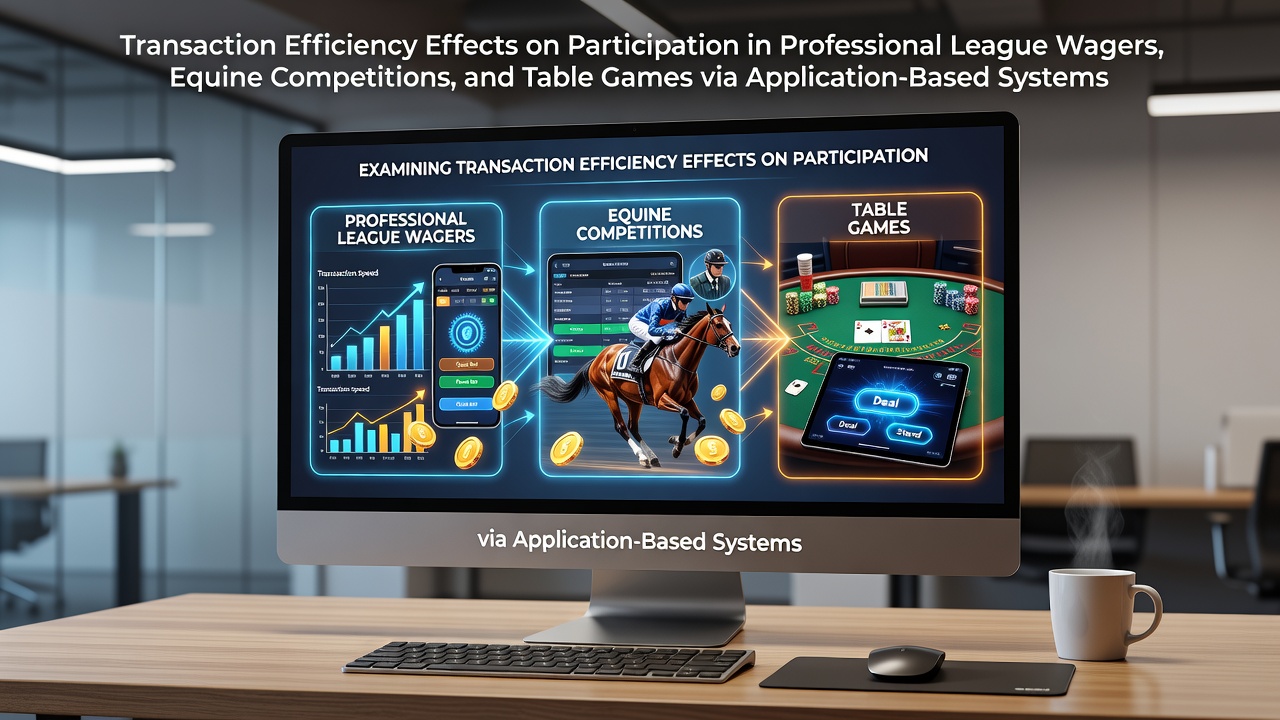
Transaction Efficiency and Its Influence on Mobile Engagement in Professional Sports Wagering, Equine Racing, and Casino Gaming
Payment processing speeds directly shape how users interact with application-based systems for professional league wagers, equine competitions, and table games. Research from multiple regulatory bodies shows that faster deposit and withdrawal times correlate with higher session durations and repeat engagement across these categories. In June 2026, platform data indicated that apps completing transactions in under 10 seconds recorded participation rates up to 35 percent above those with longer processing windows, according to figures from the Australian Gambling Research Centre.
Professional league markets such as basketball and football see the strongest response to instant funding options. Bettors who move between live odds and settled positions rely on seamless wallet connections to maintain momentum during games. When delays exceed 30 seconds, activity drops as users exit apps rather than wait for confirmation. Observers note that this pattern holds steady across major events, where real-time line adjustments demand immediate capital access to capitalize on shifting probabilities.
Patterns Across Different Betting Categories
Equine racing presents a distinct profile because races occur at fixed intervals with limited windows for placing bets. Transaction efficiency becomes critical during multi-race sequences, where participants often transfer funds between accounts to follow form changes. Data indicates that platforms offering one-click transfers between racing forms and other markets maintain higher retention through afternoon and evening cards. Studies from Canadian provincial gaming authorities reveal that equine bettors who experience sub-15-second processing complete an average of 2.4 more wagers per session compared to slower environments.
Table games follow yet another rhythm, with continuous play cycles that reward uninterrupted access to credit. Roulette and blackjack sessions on mobile platforms show pronounced sensitivity to withdrawal friction, as players frequently move winnings into sports or racing markets mid-evening. When payment bridges operate smoothly, engagement stretches longer; when friction appears, users tend to close sessions earlier. This dynamic appears consistently in aggregated reports covering both land-based and virtual table offerings.
Integration of Payment Systems and Market Switching
Application developers have responded by embedding integrated networks that link sportsbooks, racetracks, and casino floors through unified ledgers. These systems allow users to shift capital from an NFL prop to a horse race or blackjack table without separate authentication steps. In June 2026, several major operators reported that such unified wallets increased cross-category participation by 28 percent year-over-year. The efficiency gains stem from reduced authentication layers and real-time balance updates that eliminate manual reconciliation.

Regulatory data from the Malta Gaming Authority further supports these observations, showing that jurisdictions with standardized instant payment protocols experience elevated mobile adoption rates across all three verticals. The protocols reduce error rates during high-volume periods, which in turn supports sustained participation rather than sporadic logins. Operators implementing these standards record lower abandonment during peak evening hours when multiple event types overlap.
Quantitative Effects on User Behavior
Analytics platforms tracking transaction logs demonstrate clear thresholds. Deposits processed in five seconds or less produce the highest conversion from browsing to active wagering. Between five and 20 seconds, participation remains stable but shows slight declines in multi-market chaining. Beyond 20 seconds, measurable drop-offs occur, particularly in time-sensitive equine and live league markets. Table game engagement proves somewhat more resilient to moderate delays, yet still registers reduced volume when withdrawal times stretch past one minute.
Wallet integration patterns also influence promotional credit usage. When bonus funds move instantly into active balances, redemption rates climb. Research indicates that synchronized promotional and real-money ledgers encourage users to test new categories they might otherwise avoid due to funding friction. This effect appears across professional sports, racing circuits, and casino tables, creating broader market exposure for operators who optimize these connections.
Conclusion
Transaction efficiency operates as a foundational driver of sustained participation in mobile-based professional league wagers, equine competitions, and table games. Platforms that minimize processing intervals enable fluid movement between categories, supporting higher overall engagement volumes. Data compiled through mid-2026 confirms that these technical capabilities translate directly into measurable differences in user activity across diverse regulatory environments and market segments.